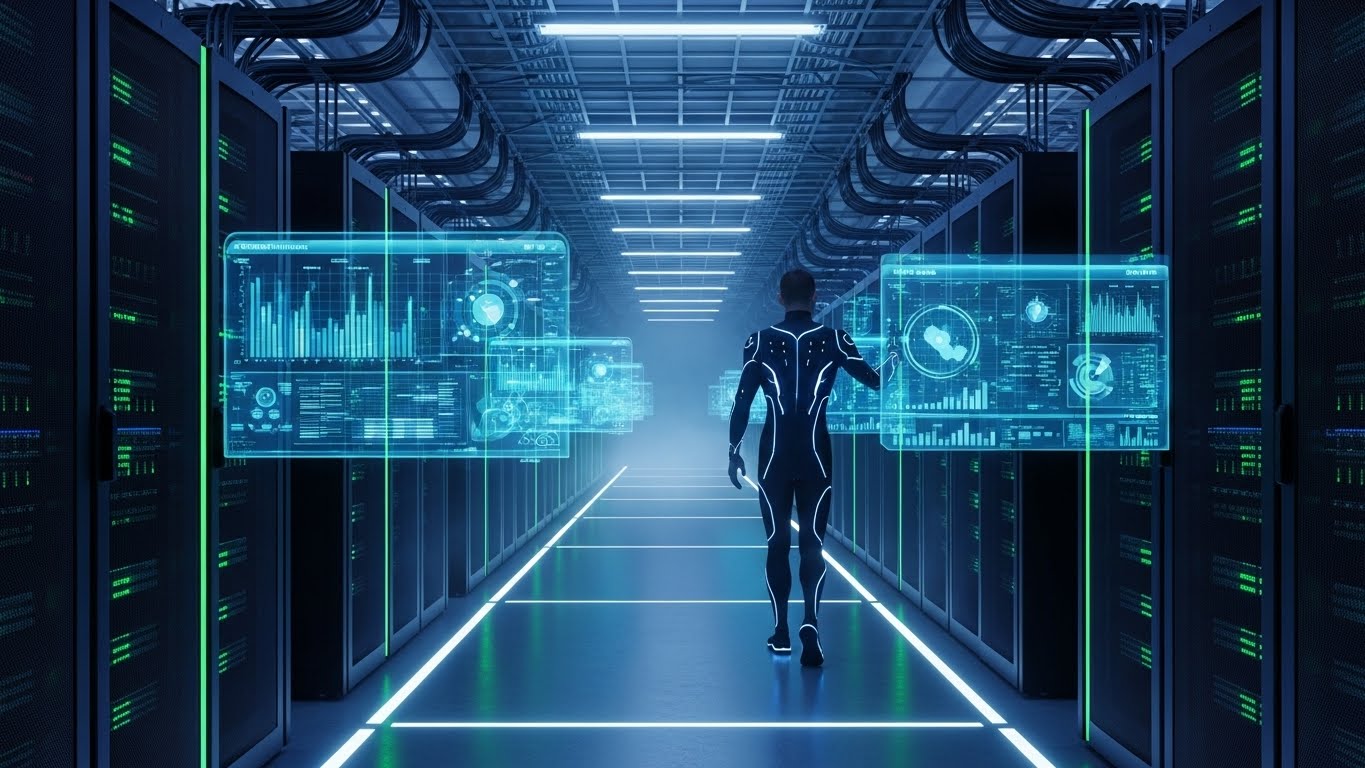

Technology is constantly evolving, changing the way we live, work, and interact with the world around us. What was once considered science fiction is now becoming a reality, with breakthroughs happening every day. From artificial intelligence and machine learning to the Internet of Things and quantum computing, the tech landscape is brimming with advancements that promise to shape our future. In this blog post, we’ll dive deep into the technologies that are revolutionizing industries, transforming our daily lives, and challenging the limits of what we once thought possible.
The Rise of Artificial Intelligence: A New Era of Innovation
Artificial Intelligence (AI) is one of the most talked-about technological advancements in recent years. AI, which refers to machines or systems that can simulate human intelligence, has expanded its capabilities to a level that was previously unimaginable. Today, AI is driving progress in industries ranging from healthcare and finance to transportation and entertainment.
In healthcare, AI is already improving diagnostics and patient care. Machine learning algorithms are now capable of analyzing medical data, detecting patterns, and even predicting health issues before they become critical. AI-powered tools are helping doctors and medical professionals in early disease detection, enhancing the accuracy of diagnoses, and improving patient outcomes.
In the world of business, AI has revolutionized customer service. Chatbots powered by AI are now an integral part of many customer support systems. These chatbots can understand and respond to customer inquiries in real-time, providing immediate assistance and freeing up human agents to handle more complex issues. AI is also being used to personalize user experiences, whether it’s recommending products based on browsing history or offering tailored content based on viewing preferences.
However, the most transformative application of AI is still in its infancy. Autonomous vehicles, powered by AI, are set to redefine transportation as we know it. Self-driving cars promise to reduce traffic accidents, improve road safety, and optimize transportation networks. Although we are not yet at the point where fully autonomous cars dominate the roads, the development of AI-driven vehicles is progressing rapidly, and in the coming decades, they could become a common sight on highways worldwide.
Machine Learning: The Backbone of Modern Technology
Machine Learning (ML) is a subset of AI that focuses on creating algorithms capable of learning from and making predictions or decisions based on data. In simple terms, ML allows systems to automatically improve their performance over time without being explicitly programmed. This type of technology is already pervasive in our daily lives, though we may not always realize it.
One of the most common applications of ML is in recommendation systems. Whether you’re scrolling through Netflix, Amazon, or Spotify, machine learning algorithms are behind the personalized recommendations that seem to know exactly what you want to watch, buy, or listen to. These systems use large amounts of data, including your preferences, ratings, and even patterns from other users, to predict what you might enjoy next.
Machine learning is also reshaping industries like finance and insurance. By analyzing vast amounts of historical data, machine learning models can predict market trends, detect fraud, and assess risk with a level of accuracy far beyond human capabilities. In healthcare, ML algorithms are improving the early detection of diseases such as cancer by analyzing medical images and identifying subtle patterns that might be missed by the human eye.
In the field of natural language processing (NLP), machine learning is also making significant strides. Virtual assistants like Siri, Alexa, and Google Assistant rely heavily on machine learning to understand and respond to human commands. These systems continuously learn from user interactions, improving their accuracy and ability to interpret complex language over time.
Quantum Computing: The Next Frontier in Processing Power
Quantum computing is one of the most exciting and potentially transformative areas of technology today. Unlike classical computers, which rely on bits to represent information as either a 0 or a 1, quantum computers use quantum bits, or qubits. Qubits can exist in multiple states simultaneously, thanks to a phenomenon known as superposition. This ability allows quantum computers to perform complex calculations exponentially faster than traditional computers.
While quantum computing is still in its early stages, the potential applications of this technology are vast. In fields like cryptography, quantum computing could break current encryption methods, leading to a new era of digital security. In pharmaceuticals, quantum computers could simulate molecular structures to accelerate drug discovery and development. The ability to model and understand molecular behavior at such a detailed level could lead to breakthroughs in medicine and materials science that were previously unimaginable.
Quantum computing also has the potential to revolutionize artificial intelligence and machine learning. By processing massive amounts of data at unprecedented speeds, quantum computers could significantly enhance the capabilities of AI systems, leading to faster problem-solving, improved decision-making, and more accurate predictions.
However, there are still significant challenges to overcome before quantum computing becomes widely accessible. The technology is still highly experimental, and building large-scale, stable quantum computers requires overcoming hurdles related to qubit coherence and error correction. Despite these challenges, major companies like IBM, Google, and Microsoft are pouring resources into quantum research, and many believe that it is only a matter of time before quantum computers become mainstream.
The Internet of Things: Connecting the World
The Internet of Things (IoT) refers to the network of physical objects, devices, and systems that are connected to the internet and can communicate with each other. These “smart” devices range from everyday household items like refrigerators, thermostats, and light bulbs to industrial machines and vehicles. The IoT has the potential to revolutionize how we interact with our environment, offering greater convenience, efficiency, and even sustainability.
One of the most common uses of IoT technology is in smart homes. Devices like smart speakers, security cameras, and thermostats allow homeowners to control their environment remotely. Through apps or voice commands, users can adjust their home’s temperature, monitor security cameras, or even turn off lights while away from home. These systems not only offer convenience but also help reduce energy consumption, which is a significant factor in combating climate change.
In industrial settings, IoT is being used to improve efficiency and reduce downtime. Sensors embedded in machinery can monitor performance in real-time, detecting issues before they lead to breakdowns. Predictive maintenance, powered by IoT data, allows companies to perform maintenance tasks proactively, minimizing disruption and extending the life of their equipment.
In healthcare, IoT is enabling the development of wearable devices that monitor vital signs and track physical activity. These devices can alert users or healthcare professionals to potential health issues, such as an irregular heartbeat or a dangerous spike in blood pressure, allowing for early intervention and improved patient care.
While IoT technology is already making a significant impact, its true potential is yet to be fully realized. The continued growth of 5G networks, which offer faster internet speeds and lower latency, will further accelerate the adoption of IoT, enabling even more devices to be connected and communicate with one another.
5G: The Backbone of a Connected Future
5G technology is the next generation of wireless connectivity, offering faster speeds, lower latency, and the ability to connect more devices than ever before. While 4G revolutionized mobile communication by enabling faster internet browsing and streaming, 5G takes this to the next level, making it possible to download movies in seconds, stream high-quality content with no buffering, and enjoy seamless video calls with little to no lag.
One of the most transformative aspects of 5G is its ability to support the massive growth of connected devices. As more and more devices become part of the Internet of Things, 5G will provide the infrastructure necessary to handle the vast amounts of data generated by these devices. This will enable smarter cities, more efficient supply chains, and better-connected healthcare systems.
5G also promises to revolutionize industries such as autonomous driving, virtual reality, and augmented reality. Autonomous vehicles, for example, require low-latency connections to process data from sensors and communicate with other vehicles and infrastructure in real-time. 5G’s ultra-low latency will be essential for ensuring the safety and reliability of self-driving cars. Similarly, 5G’s high-speed capabilities will enhance the immersive experiences offered by virtual and augmented reality applications, opening up new possibilities in gaming, entertainment, and education.
While 5G is still being rolled out in many parts of the world, its potential is clear. The widespread adoption of 5G will accelerate innovation in countless industries and drive the development of new technologies and services that were once unimaginable.
Conclusion: Embracing a Future Shaped by Technology
As we look toward the future, it is clear that technology will continue to play a central role in shaping our world. Artificial intelligence, machine learning, quantum computing, the Internet of Things, and 5G are just a few of the innovations that will transform industries and improve our daily lives. While there are still challenges to overcome, the pace of progress is accelerating, and the possibilities are endless.
The key to navigating this rapidly changing landscape will be embracing these technologies with an open mind, understanding their potential, and using them responsibly. As we continue to innovate and push the boundaries of what is possible, we must also ensure that these advancements are used to benefit society as a whole, creating a future that is not only more connected and efficient but also more inclusive, sustainable, and equitable for all.