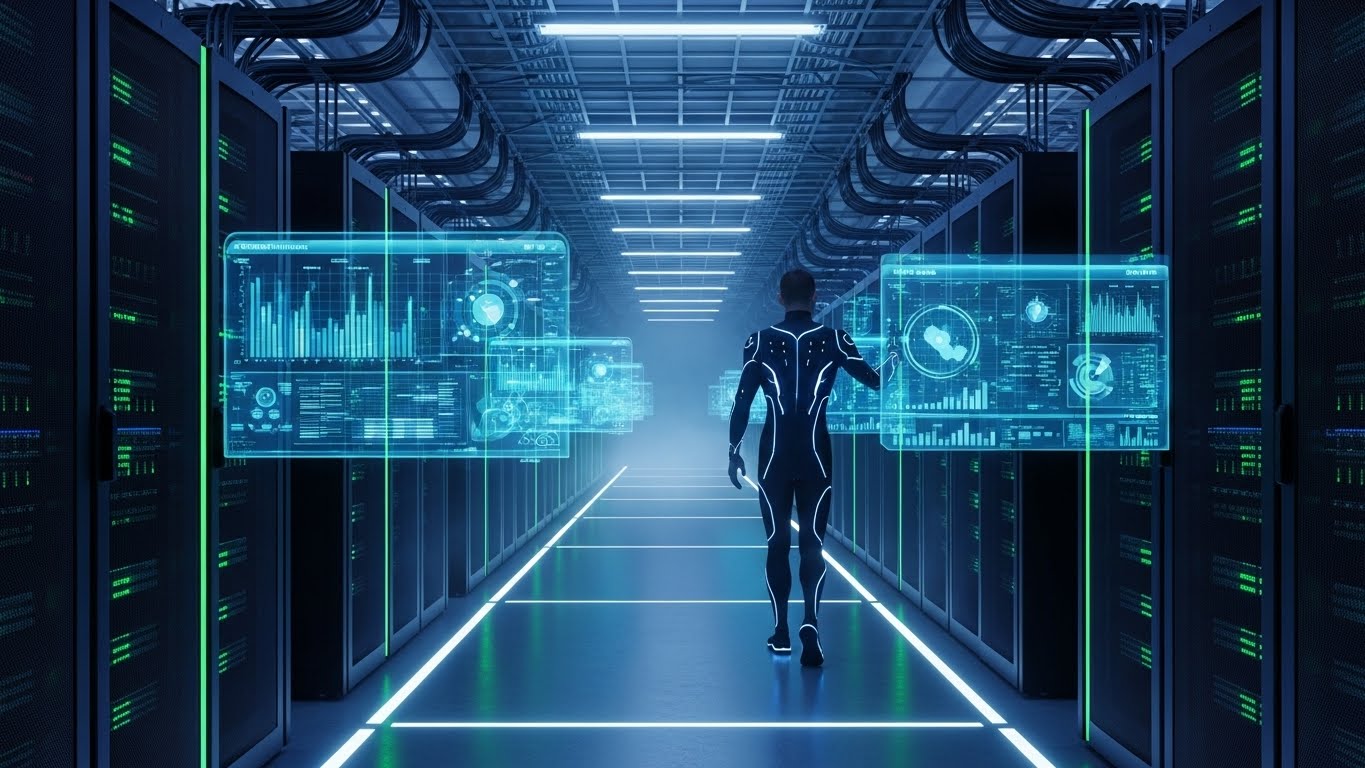

The Future of Technology: How Innovation is Shaping Tomorrow
Introduction
Technology has always been the driving force behind societal evolution. From the invention of the wheel to the rise of the internet, every era has witnessed breakthroughs that have redefined the way humans live, communicate, and work. In the 21st century, the pace of technological advancement is accelerating faster than ever before. Artificial intelligence, blockchain, quantum computing, and next-generation connectivity are no longer just buzzwords—they are shaping the world we live in and the world we are heading toward. This blog explores the key technologies transforming the modern landscape and the implications they carry for individuals, businesses, and society as a whole.
Artificial Intelligence: The Brain of Modern Technology
Artificial Intelligence (AI) has evolved from a niche academic field into a transformative force across multiple industries. AI systems are capable of learning, analyzing vast amounts of data, and even making decisions with minimal human intervention. Today, AI powers personal assistants, recommendation systems, and autonomous vehicles. Businesses leverage AI for predictive analytics, customer service automation, and efficient supply chain management. The impact of AI extends beyond convenience; it has the potential to solve complex challenges, such as climate modeling, disease detection, and energy optimization. However, with great power comes great responsibility. Ethical considerations, including data privacy, bias in AI algorithms, and job displacement, are critical discussions in the AI landscape.
Quantum Computing: Unlocking Unimaginable Potential
While classical computers have revolutionized the way we process information, quantum computing promises to unlock computational capabilities beyond current limits. Quantum computers rely on qubits, which can represent multiple states simultaneously, enabling exponentially faster processing for certain tasks. Industries such as pharmaceuticals, logistics, and finance stand to gain immensely from quantum computing. For example, simulating molecular structures for drug discovery could become faster and more accurate, potentially accelerating medical breakthroughs. Despite the immense potential, quantum computing is still in its developmental phase, and significant technical challenges remain, including error correction, qubit stability, and scalability. The race for practical quantum computing continues, and whoever succeeds first could redefine technological dominance.
Blockchain Technology: Beyond Cryptocurrencies
Blockchain is widely recognized as the backbone of cryptocurrencies, but its applications extend far beyond digital money. At its core, blockchain is a decentralized, tamper-proof ledger system that ensures transparency, security, and trust without intermediaries. Industries ranging from supply chain management to healthcare and real estate are exploring blockchain solutions. For instance, blockchain can track the provenance of goods, ensuring authenticity and ethical sourcing, or securely store patient records while maintaining privacy. The concept of smart contracts—self-executing contracts with predefined rules—also promises to automate complex legal and financial processes, reducing bureaucracy and inefficiencies. Blockchain is gradually transforming traditional business models and introducing new opportunities for innovation.
5G and Next-Generation Connectivity: The World at Lightning Speed
The rollout of 5G networks marks a major leap forward in wireless communication. With significantly higher speeds, lower latency, and massive connectivity capabilities, 5G is more than just an upgrade from 4G; it is the foundation for future technologies. Applications such as autonomous vehicles, remote surgery, smart cities, and immersive augmented reality experiences rely on the capabilities of 5G networks. Faster and more reliable connectivity enables real-time communication between devices, creating an ecosystem where machines and humans interact seamlessly. The widespread adoption of 5G, combined with advancements in the Internet of Things (IoT), promises to make cities smarter, industries more efficient, and daily life more interconnected than ever before.
Internet of Things: Connecting the Physical and Digital Worlds
The Internet of Things (IoT) refers to the network of physical objects embedded with sensors, software, and connectivity, allowing them to collect and exchange data. From smart homes to industrial automation, IoT is revolutionizing the way we interact with our surroundings. Smart appliances optimize energy consumption, wearable devices monitor health metrics, and industrial IoT enhances operational efficiency. The data generated by IoT devices fuels AI and machine learning models, providing actionable insights and enabling predictive maintenance, smarter decision-making, and improved user experiences. However, IoT also raises concerns regarding cybersecurity, data privacy, and device interoperability, highlighting the need for robust standards and regulations.
Augmented and Virtual Reality: Redefining Experiences
Augmented Reality (AR) and Virtual Reality (VR) are no longer limited to gaming and entertainment. These technologies have found applications in education, healthcare, architecture, and retail. AR overlays digital information onto the real world, enhancing learning, navigation, and professional tasks. VR creates immersive virtual environments, allowing users to experience simulations, training programs, and virtual tourism. The fusion of AR and VR, often referred to as mixed reality, is poised to create entirely new ways of interacting with digital content. As these technologies mature, they promise to redefine how we work, learn, and socialize, bridging the gap between the physical and digital realms.
Cybersecurity: Protecting the Digital Frontier
As technology becomes increasingly integrated into every aspect of life, cybersecurity has never been more critical. The rise of connected devices, cloud computing, and digital transactions has expanded the attack surface for malicious actors. Cybersecurity involves protecting systems, networks, and data from unauthorized access, disruption, or damage. Organizations are investing heavily in advanced threat detection, encryption, and security protocols to safeguard sensitive information. Individual users must also adopt good practices, including strong password management, software updates, and awareness of phishing attacks. In a digital world, cybersecurity is not optional—it is fundamental to maintaining trust, privacy, and stability.
Sustainable Technology: Innovation with Responsibility
Technology is often associated with progress, but it also carries environmental and social responsibilities. Sustainable technology focuses on creating innovations that minimize environmental impact, reduce resource consumption, and promote social well-being. Renewable energy solutions, energy-efficient data centers, electric vehicles, and green manufacturing processes are examples of sustainable technological practices. Businesses are increasingly adopting circular economy models, recycling electronic waste, and developing eco-friendly products. The convergence of technology and sustainability presents opportunities for innovation that benefit both the planet and society, proving that progress and responsibility can go hand in hand.
The Future of Work: Technology as an Enabler
Technological advancement is reshaping the nature of work across industries. Automation, AI, and robotics are streamlining repetitive tasks, allowing humans to focus on creativity, strategy, and problem-solving. Remote work and digital collaboration tools have transformed traditional office environments, enabling global teams to operate efficiently across time zones. While technology can enhance productivity and flexibility, it also presents challenges such as workforce displacement, skill gaps, and the need for continuous learning. Preparing for the future of work requires embracing lifelong learning, adaptability, and a mindset that views technology as a tool for empowerment rather than replacement.
Conclusion
Technology is no longer a passive tool; it is an active force that shapes the world and the future of humanity. Artificial intelligence, quantum computing, blockchain, 5G, IoT, AR/VR, cybersecurity, sustainable innovation, and the evolving workplace all demonstrate the profound impact of technological advancement. As we navigate this dynamic landscape, it is crucial to balance innovation with responsibility, ensuring that progress benefits society as a whole. The future is not something that happens to us—it is something we create, and technology is the canvas upon which we can paint a smarter, more connected, and sustainable world.