
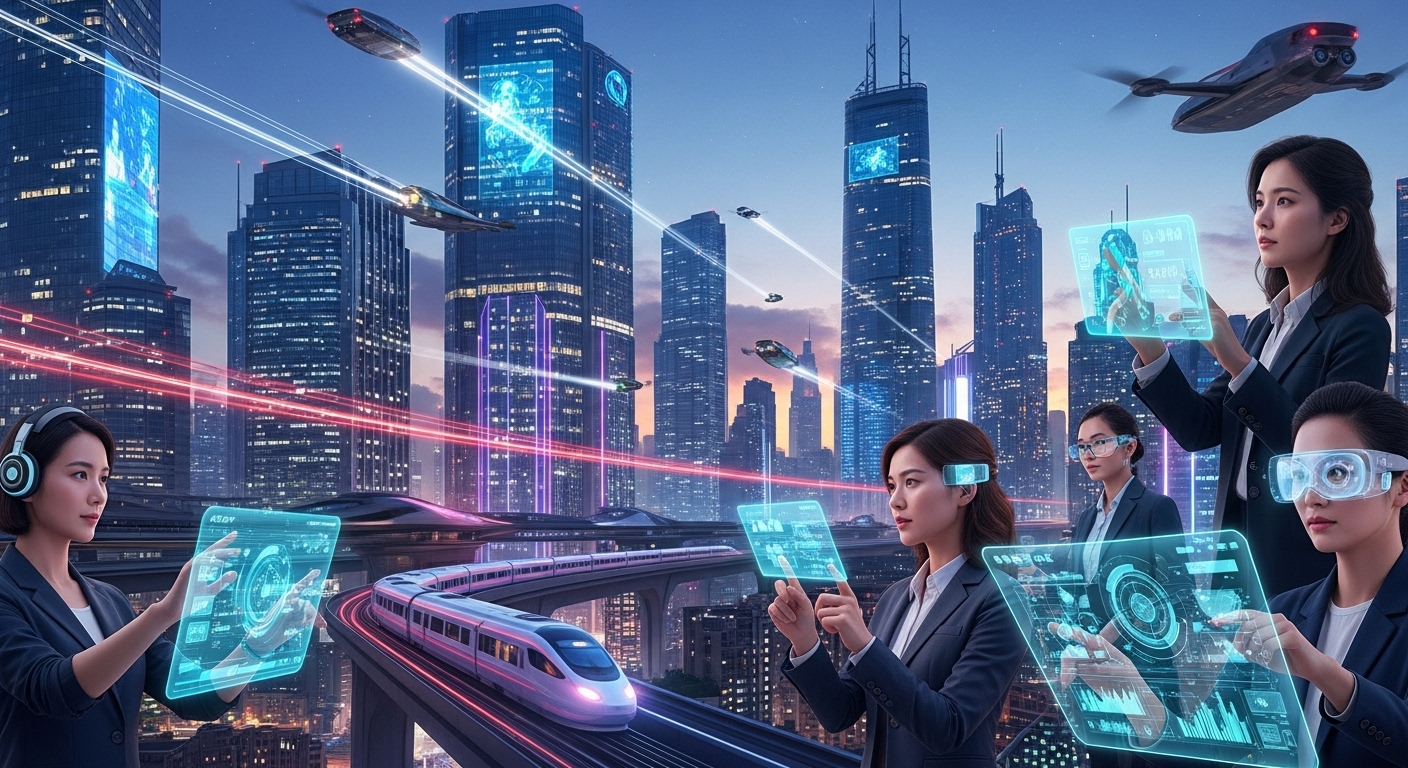
The Digital Revolution: How Technology is Shaping the Future of Humanity
Introduction: The Age of Digital Transformation
In the 21st century, technology has become the driving force behind nearly every aspect of modern life. From the way we communicate and work to how we learn and entertain ourselves, the digital revolution is reshaping the world in profound ways. What was once considered cutting-edge innovation has become a daily necessity, influencing everything from healthcare to transportation, education to entertainment. But beyond convenience, technology is transforming the very fabric of society—creating new opportunities, driving economic growth, and challenging our understanding of what it means to be human.
This blog will explore how technology is affecting every facet of life and examine the opportunities, challenges, and future implications of our increasingly digital world.
The Evolution of Technology: From the Industrial Revolution to the Digital Age
Technology is not a recent phenomenon, but its speed and scale of change in the past few decades have been unprecedented. Over the last two centuries, we’ve transitioned from the Industrial Revolution, which brought mechanization and mass production, to the Information Age, where computers, the internet, and artificial intelligence (AI) have revolutionized the way we interact with the world.
In the early 20th century, the introduction of the automobile, the telephone, and electricity changed the lives of millions. However, it wasn’t until the second half of the century that technology began to evolve at a truly exponential rate. The advent of personal computers, the internet, and mobile phones connected people around the world and democratized access to information. Today, we are in the midst of the Fourth Industrial Revolution, where emerging technologies like AI, blockchain, quantum computing, and biotechnology are poised to fundamentally alter the landscape of industries, economies, and societies.
The Role of Technology in Communication: Connecting the World Like Never Before
One of the most profound impacts of technology has been in the realm of communication. Thanks to the internet, smartphones, and social media, the world is more connected than ever before. Today, it’s possible to send a message, make a video call, or share an idea with anyone, anywhere in the world, in real time.
The rise of social media platforms like Facebook, Instagram, Twitter, and LinkedIn has made it easier to stay connected with friends, family, and colleagues. These platforms also allow individuals to share their opinions, promote businesses, and even drive political movements. Additionally, messaging apps like WhatsApp and Telegram provide instant communication channels, making long-distance communication more affordable and efficient.
Video conferencing tools like Zoom, Microsoft Teams, and Google Meet have revolutionized the workplace, enabling people to collaborate remotely across borders. The COVID-19 pandemic accelerated the adoption of these technologies, cementing their role in shaping the future of work and communication. As we look ahead, 5G networks, virtual reality, and augmented reality are set to further transform how we connect and interact with others in both personal and professional settings.
Technology’s Impact on Work and Productivity: Revolutionizing Industries
Technology has also drastically altered the way we work. Automation, artificial intelligence, and data analytics are driving efficiencies across industries, from manufacturing and logistics to finance and healthcare. The integration of AI and machine learning algorithms in workplaces allows businesses to streamline operations, predict market trends, and optimize customer service.
In the past, repetitive tasks such as data entry and customer inquiries were often manual, time-consuming, and prone to human error. With the advent of AI-powered chatbots, voice assistants, and robotic process automation (RPA), businesses can automate these tasks, freeing up human workers to focus on higher-level problem solving and creative work.
The rise of the gig economy, fueled by platforms like Uber, TaskRabbit, and Upwork, has also reshaped traditional concepts of employment. Today, millions of people around the world can earn income through freelance or short-term work, often facilitated by technology platforms that match supply and demand in real time. These changes in the workforce not only bring new opportunities but also present challenges, such as the need for reskilling and upskilling to keep pace with technological advancements.
The Future of Education: Technology as a Gateway to Learning
The education sector has been another major beneficiary of technological advancements. E-learning platforms like Coursera, Khan Academy, and Duolingo have made education more accessible to millions, breaking down barriers related to geography, cost, and availability of resources. The proliferation of online courses, MOOCs (Massive Open Online Courses), and digital textbooks allows learners to access high-quality education from top universities and institutions around the world.
Additionally, technology is changing the way education is delivered. Interactive learning tools such as virtual classrooms, online simulations, and educational games engage students in new and exciting ways. Virtual reality (VR) and augmented reality (AR) are being used to create immersive learning environments, allowing students to experience history, science, and art in ways that were once unimaginable.
For example, VR can be used to take students on a virtual field trip to ancient Rome or the moon, providing experiences that textbooks alone could never offer. Furthermore, AI-based tutoring systems can provide personalized learning experiences, adjusting content and pace according to a student’s needs.
Technology has democratized education in ways that were previously unthinkable, allowing anyone with an internet connection to learn and grow. However, it also presents challenges, such as the digital divide, where students in lower-income regions may not have access to the technology needed for online learning.
Technology in Healthcare: Revolutionizing Medicine and Patient Care
Perhaps one of the most important areas where technology has made an impact is healthcare. The rise of digital health tools, wearable devices, and telemedicine is transforming how medical professionals diagnose, treat, and manage diseases. Innovations in medical imaging, robotic surgeries, and AI-powered diagnostic tools have improved the accuracy and speed of medical care.
Wearable devices like smartwatches and fitness trackers monitor vital signs in real time, providing valuable data that helps doctors make informed decisions. These devices can track heart rate, blood pressure, and even detect irregularities that might signal an underlying health issue, often before symptoms appear.
Telemedicine, which allows patients to consult with healthcare providers remotely, has made healthcare more accessible, particularly in underserved or rural areas. This technology has proved essential during the COVID-19 pandemic, enabling people to receive medical care without leaving their homes. AI and machine learning are also playing a crucial role in drug discovery, helping scientists identify promising compounds faster than traditional methods.
Despite these advancements, the healthcare sector faces significant challenges in integrating new technologies into existing systems, ensuring data security, and addressing ethical concerns related to privacy and access to care.
The Role of Artificial Intelligence: Changing the Landscape of Technology
Artificial intelligence (AI) has emerged as one of the most transformative technologies of our time. AI refers to machines or systems that can simulate human intelligence, such as learning, problem-solving, and decision-making. Machine learning, a subset of AI, enables systems to improve their performance over time by learning from data without being explicitly programmed.
AI is already being used in a wide range of applications, from natural language processing (like chatbots) to image recognition (used in autonomous vehicles). In healthcare, AI helps doctors with diagnostics, interpreting medical images, and predicting patient outcomes. In the finance industry, AI is used for fraud detection, algorithmic trading, and personalized banking services.
While AI offers immense potential, it also raises important ethical and societal questions. As AI becomes more integrated into everyday life, concerns about job displacement, algorithmic bias, and privacy will need to be addressed. Additionally, the increasing reliance on AI-powered systems calls for robust regulatory frameworks to ensure that these technologies are used responsibly and ethically.
The Impact of Technology on the Environment: Challenges and Solutions
While technology has brought about immense progress, it has also introduced environmental challenges. The production and disposal of electronic devices contribute to e-waste, and the energy consumption of data centers and cryptocurrency mining operations has raised concerns about sustainability.
However, technology is also providing solutions to environmental problems. Renewable energy technologies, such as solar and wind power, are helping reduce dependence on fossil fuels. Electric vehicles (EVs) are becoming more affordable and accessible, reducing carbon emissions from the transportation sector. Innovations in smart grids, energy-efficient buildings, and waste management are contributing to more sustainable cities.
Technology can also be harnessed to monitor environmental changes, track climate patterns, and develop more efficient resource management systems. By leveraging technology to address environmental challenges, humanity can work towards a more sustainable future.
The Future of Technology: What’s Next?
As technology continues to advance at an exponential rate, the possibilities for the future are both exciting and uncertain. Emerging technologies like quantum computing, biotechnology, and space exploration are poised to open new frontiers for human progress. Quantum computing, for example, promises to revolutionize industries such as cryptography, pharmaceuticals, and artificial intelligence by solving complex problems that are beyond the capabilities of current computers.
However, with rapid technological advancement comes the need for responsible innovation. Society must grapple with issues such as digital ethics, privacy, security, and the social implications of automation and AI. Ensuring that technological progress benefits all of humanity requires thoughtful leadership, collaboration, and a commitment to equity and sustainability.
Conclusion: Embracing the Future of Technology
Technology has reshaped the world in ways that were once thought impossible, and its influence continues to grow. From communication and work to healthcare, education, and the environment, technology has brought about profound changes that have improved lives, created new opportunities, and redefined societal norms.
However, as we look to the future, it’s crucial to remember that technology must be developed and used responsibly. By addressing the ethical, environmental, and social challenges associated with technological advancement, we can ensure that the digital revolution remains a force for good, benefiting humanity and the planet for generations to come.