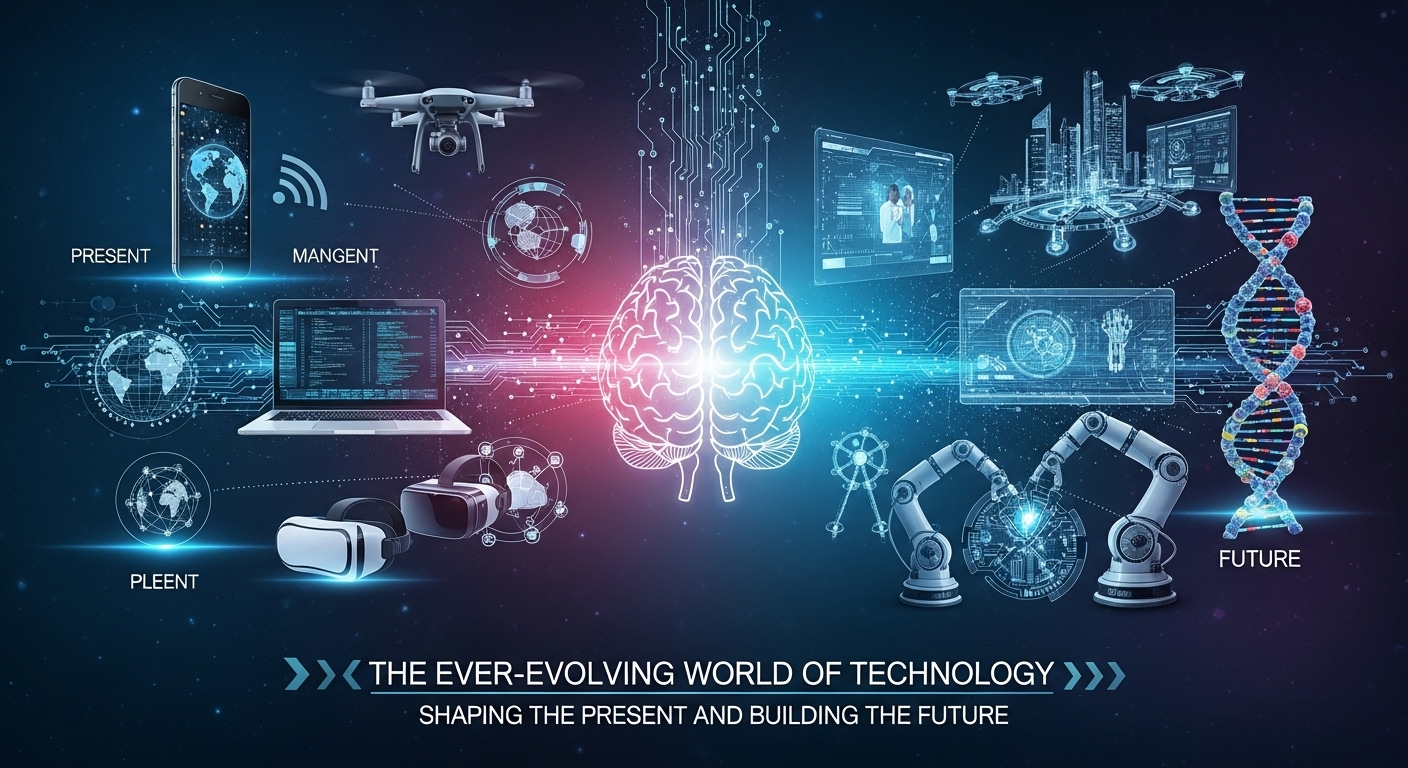
Technology has always been the driving force behind human progress. From the first stone tools to artificial intelligence, it has transformed every aspect of our lives, redefining how we live, work, learn, and interact. Over the past few decades, the pace of technological advancement has accelerated beyond imagination, ushering in an era where digital systems, automation, and connectivity dominate our existence. The journey from analog to digital, from mechanical to intelligent, has not only changed industries but has also reshaped the very nature of humanity’s relationship with the world.
This essay explores the evolution of technology — its origins, milestones, impacts, and the philosophical questions it raises about the future of human civilization.
The Dawn of Human Innovation
Long before smartphones and supercomputers, early humans relied on primitive tools to survive. The first technological revolution began with the discovery of fire, which provided warmth, protection, and the ability to cook food. This simple yet profound innovation changed the trajectory of human evolution. As centuries passed, the invention of the wheel, the plow, and metal tools enabled agriculture and trade, leading to the rise of civilizations.
Every step of progress depended on humanity’s ability to solve problems through creativity. From the construction of the Egyptian pyramids to the development of irrigation systems in Mesopotamia, each innovation reflected not just practical necessity but also the human desire to control and understand nature. Even in these early eras, the seeds of technological dependence were being sown.
The Industrial Revolution: The Birth of Modern Technology
The Industrial Revolution marked one of the most significant turning points in history. Beginning in the 18th century, it introduced machinery powered by steam and later electricity, revolutionizing production, transportation, and communication. Factories replaced manual labor, cities grew rapidly, and economies shifted from agrarian to industrial.
The steam engine was perhaps the most transformative invention of the era. It powered locomotives and ships, connecting distant lands and accelerating global trade. Textile mills, iron foundries, and other industries became centers of productivity, while telegraphs and printing presses allowed information to spread faster than ever before.
Yet the Industrial Revolution also had its darker side. While it created wealth and opportunity, it also led to social inequality, harsh labor conditions, and environmental degradation. The air in cities grew thick with smoke, and the gap between the rich industrialists and poor workers widened. Despite these challenges, the era laid the groundwork for the technological mindset that defines the modern age — one of innovation, competition, and relentless progress.
The Digital Revolution: Information Becomes Power
If the Industrial Revolution mechanized labor, the Digital Revolution mechanized thought. The 20th century saw the rise of computing — machines capable of processing information faster than any human mind. What began as large, room-sized computers used for military and academic purposes soon evolved into personal computers and portable devices accessible to the masses.
The invention of the microprocessor in the 1970s marked a new era. Companies like IBM, Apple, and Microsoft transformed computing from an elite scientific pursuit into a household necessity. The Internet, which emerged from government research networks, expanded into a global system of communication that redefined how people interacted. Information, once scarce and slow to circulate, became instant and infinite.
The personal computer was more than a machine; it was an extension of human intellect. It allowed individuals to write, calculate, design, and communicate in ways previously unimaginable. As the World Wide Web emerged in the 1990s, it democratized information, giving birth to the first wave of digital entrepreneurs and a new form of social and economic interaction that would soon dominate the 21st century.
The Rise of the Internet Age
By the early 2000s, the Internet had become the backbone of global connectivity. Websites replaced newspapers, emails replaced letters, and search engines became the gateway to the world’s knowledge. The emergence of social media platforms transformed the fabric of communication itself. Suddenly, anyone with a device and an Internet connection could broadcast ideas, share stories, and influence millions.
The Internet blurred the boundaries between producer and consumer. Bloggers, video creators, and online influencers became the new media moguls, redefining entertainment and journalism. The economy began shifting toward digital platforms, with e-commerce transforming how goods and services were exchanged. The Internet also became a space for learning, activism, and innovation, empowering marginalized voices and accelerating social change.
However, this new digital reality came with challenges. Privacy concerns, misinformation, and cybercrime emerged as major issues. As people’s lives moved online, personal data became a valuable commodity, often traded without their knowledge. The same tools that connected humanity also created divisions, filter bubbles, and polarization. Still, the Internet remained the greatest technological leap since electricity — a global nervous system linking billions of minds.
Mobile Technology and the Age of Constant Connectivity
The introduction of smartphones revolutionized technology yet again. With the launch of devices capable of calling, texting, browsing, and running countless applications, the world entered the era of mobility. No longer bound to desks or cables, users carried entire digital ecosystems in their pockets. Apps transformed daily life — from banking and navigation to communication and entertainment.
This era also marked the rise of mobile-based economies. Services like ride-sharing, food delivery, and digital payments changed urban living. Entire industries were built around the concept of convenience and instant gratification. People could shop, learn, and work from virtually anywhere.
But constant connectivity also introduced new forms of dependency. Notifications, social media scrolling, and digital multitasking became part of everyday life. While mobile technology empowered individuals with information and freedom, it also blurred the line between work and rest, public and private, reality and virtual experience. The smartphone became both a tool of liberation and a source of mental clutter.
Artificial Intelligence: The Dawn of Machine Intelligence
Among all modern innovations, artificial intelligence represents the most profound shift in technological evolution. AI systems are no longer just programmed machines; they can learn, adapt, and make decisions independently. Through techniques like machine learning and neural networks, computers can now recognize speech, translate languages, recommend products, drive vehicles, and even generate art.
AI’s impact extends across industries. In healthcare, algorithms diagnose diseases and predict outbreaks. In finance, they analyze markets and detect fraud. In education, adaptive learning platforms personalize instruction for each student. AI-powered automation in manufacturing and logistics has increased productivity and reduced costs.
Yet, as machines grow more intelligent, ethical questions arise. What happens to human jobs when automation replaces them? How do we ensure AI systems make fair and unbiased decisions? What responsibilities do developers have when their creations influence human behavior? These questions highlight the delicate balance between innovation and ethics that defines the AI era.
The Internet of Things: A Connected World
The Internet of Things (IoT) extends the reach of the Internet beyond computers and smartphones to everyday objects. From smart thermostats and wearable devices to connected cars and appliances, IoT technology integrates data into the physical world. This interconnected ecosystem promises efficiency, sustainability, and convenience — homes that adjust themselves, cities that manage traffic automatically, and industries that monitor operations in real time.
However, a connected world also brings new vulnerabilities. Each device represents a potential point of attack for hackers. Data privacy becomes harder to safeguard as sensors collect vast amounts of personal information. Still, the potential benefits of IoT — from energy optimization to improved healthcare monitoring — make it one of the most transformative forces of the modern era.
The Cloud: The Invisible Infrastructure of the Digital Age
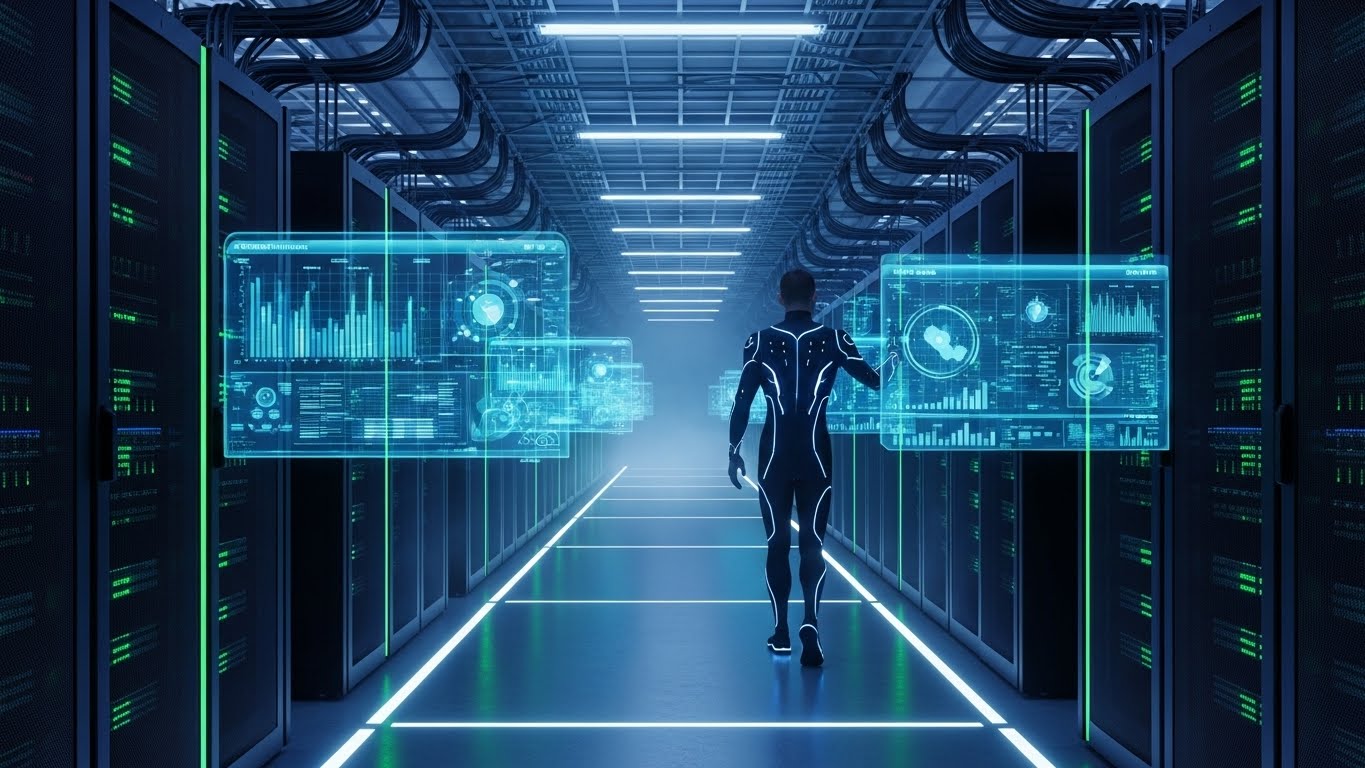
Behind every app, website, and online service lies the cloud — vast networks of servers that store and process data remotely. Cloud computing has revolutionized how businesses and individuals manage information. It enables scalability, collaboration, and accessibility, allowing users to access data anytime, anywhere.
For companies, the cloud offers a flexible alternative to maintaining physical servers. It supports innovation by providing infrastructure for artificial intelligence, big data analytics, and global-scale applications. For individuals, it means seamless synchronization across devices and easy sharing of photos, documents, and ideas.
The cloud has also redefined software distribution through the rise of “Software as a Service” (SaaS), making powerful tools available to anyone with an Internet connection. While concerns about security and data sovereignty persist, the cloud remains the invisible foundation of our interconnected world.
Cybersecurity: Defending the Digital Frontier
As technology evolves, so do threats. Cybersecurity has become one of the most critical challenges of the 21st century. Hackers, cybercriminals, and even state-sponsored groups exploit vulnerabilities in networks to steal data, disrupt systems, and manipulate information. From ransomware attacks on corporations to breaches exposing millions of users’ personal data, digital security has become a global concern.
Governments and organizations now invest heavily in encryption, threat detection, and cybersecurity education. Yet the battle is ongoing. Every new technology introduces new risks, and the sophistication of cyberattacks continues to rise. The future of digital society depends on our ability to protect privacy, ensure trust, and defend against unseen threats.
The Future of Work: Automation, Remote Labor, and Digital Collaboration
Technology has redefined the nature of work. Automation and artificial intelligence are reshaping industries, replacing repetitive tasks with algorithms and robots. At the same time, remote work, fueled by digital collaboration tools, has broken traditional office boundaries. The global workforce is more distributed than ever before.
The pandemic of the early 2020s accelerated this transformation, proving that many jobs could be done from home. Platforms for video conferencing, cloud collaboration, and project management became essential. Yet this shift also highlighted issues of digital inequality, burnout, and work-life imbalance.
The future of work will likely combine automation with human creativity. While machines handle data and logistics, humans will focus on innovation, empathy, and critical thinking — the skills machines cannot easily replicate.
Emerging Technologies: The Next Frontier
Beyond today’s innovations lie the technologies that will shape the future. Quantum computing promises to unlock computational power beyond anything previously imagined, solving problems too complex for classical computers. Biotechnology is merging with information technology, leading to breakthroughs in gene editing and personalized medicine. Renewable energy innovations are driving the transition to sustainable power sources, while space exploration technologies are preparing humanity for life beyond Earth.
Virtual and augmented reality are transforming entertainment, education, and design, blending the digital and physical worlds into immersive experiences. Meanwhile, advancements in nanotechnology could revolutionize materials, medicine, and manufacturing at the atomic level.
Each of these emerging fields carries the potential to redefine civilization, but they also demand careful consideration of ethics, accessibility, and environmental impact.
The Human Element in a Technological World
Amid all the progress, one question remains constant: what does it mean to be human in an age dominated by machines? Technology has enhanced our abilities, but it has also changed how we perceive ourselves and our relationships. Social media shapes identity. Algorithms influence opinions. Digital convenience sometimes replaces genuine connection.
The challenge for the future is not simply to create smarter machines but to ensure technology serves humanity rather than the other way around. True innovation must balance efficiency with empathy, data with dignity, and progress with purpose. As automation grows, human creativity, compassion, and ethics will become more vital than ever.
Conclusion: The Ever-Expanding Horizon of Innovation
The story of technology is the story of humanity itself — a tale of curiosity, ambition, and adaptation. From the first stone tools to artificial intelligence, every leap forward has been driven by our desire to solve problems and expand possibilities. Yet each innovation brings new challenges that test our wisdom as much as our intelligence.
In the decades ahead, the lines between human and machine, physical and digital, will continue to blur. We will live in smart cities, work alongside intelligent systems, and navigate realities both virtual and physical. The future of technology will not be defined solely by code or circuitry but by the values that guide its creation and use.
Technology is neither inherently good nor bad; it is a reflection of its creators. Its true power lies in how we choose to wield it — to connect rather than divide, to enlighten rather than exploit, and to build a world where progress serves all of humanity.